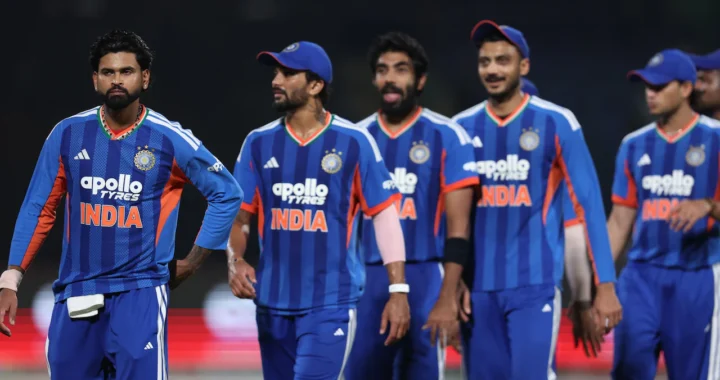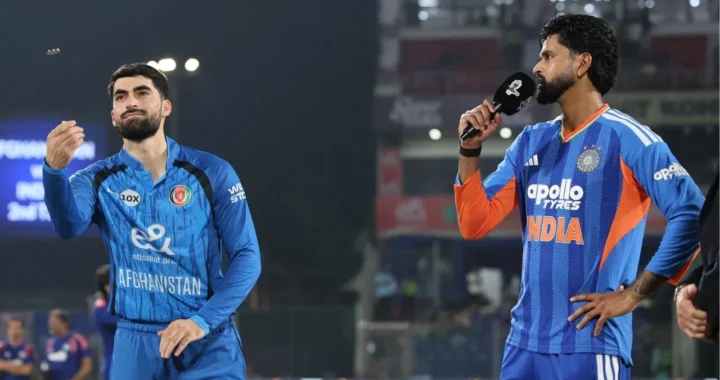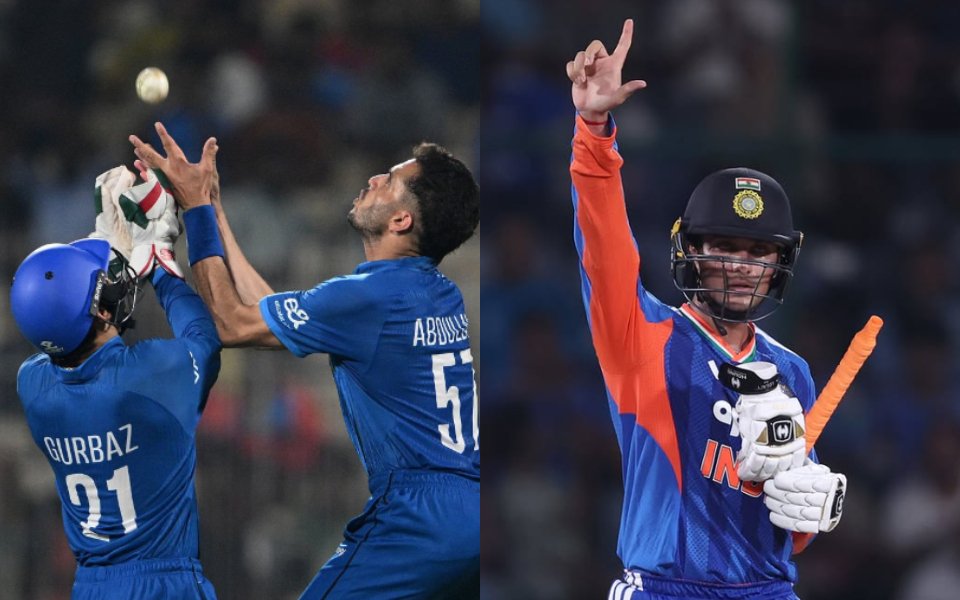
Arun Jaitley Stadium, Delhi — Tuesday, September 15, 7:30 PM IST
Afghanistan arrive at the second T20I with the series on the line and very little time to fix what went wrong. Sunday’s opener at the same venue was a one-sided affair, and a squad that treats Delhi as something close to a home ground found no comfort in it at all.
What happened in the opener
Playing their first T20I in seven months and their first match since a group-stage exit at the 2026 T20 World Cup, Afghanistan picked their strongest XI and were still behind the game almost immediately. Asked to bat, they lost their top five inside seven overs.
What rescued them was Azmatullah Omarzai. His counter-attacking fifty, built around an 83-run stand with Mohammad Nabi, dragged the innings back to something respectable. The pair went hard at India’s part-time all-rounders and got Afghanistan to 156 — a total that looked useful for about ten minutes and then didn’t.
India chased at nearly 11.5 an over. Abhishek Sharma’s 82 off 32 made the target vanish, and it doubled as vindication for a management that has kept backing him through an inconsistent run. The batting order around him remains a revolving door, though: Vaibhav Sooryavanshi, Player of the Series in Zimbabwe, was left out to bring Sanju Samson back in.
The real gap was with the ball. India’s frontline attack reassembled after long injury layoffs, and it showed. Jasprit Bumrah (1/26) and Varun Chakaravarthy (1/16) squeezed the middle overs shut, while Arshdeep Singh returned to the side and killed the late push with 3/19, dismissing both Nabi and Rashid Khan.
Pitch report and conditions
The centre wicket will be used for this game, which means more even boundary dimensions on both sides — no short square boundary to target, and slightly less scope for the kind of one-sided range-hitting that helped in the opener.
Arun Jaitley Stadium has historically been a high-scoring venue with true bounce and good carry. Expect batters to be able to trust the ball coming on to the bat, particularly under lights when the surface tends to skid on. Dew is a factor at this time of year, which usually makes chasing the preferred option — another reason the toss carries weight.
A passing shower is forecast for the afternoon, but the evening game is unlikely to be disrupted.
Verdict: a good batting surface, par around 170–180, with spinners needing to be smart rather than defensive. Winning the toss and bowling first remains the safer route.
India: one enforced change
Chakaravarthy’s return lasted exactly four overs. A fresh side strain has sent him back to the BCCI Centre of Excellence, with the team taking the cautious route given the Asian Games on the horizon. Ravi Bishnoi is the likely direct swap.
His absence matters more than a like-for-like replacement suggests, because it exposes a problem India already had. Without Hardik Pandya, the fifth and sixth bowling options are patchwork. Afghanistan found this on Sunday and punished it: 59 runs off four overs from India’s fifth bowler (shared between Nitish Reddy, Abhishek Sharma and Shivam Dube) at an economy of 14.75, including 10 boundaries.
Probable XI: Abhishek Sharma, Sanju Samson (wk), Ishan Kishan, Shreyas Iyer (c), Tilak Varma, Shivam Dube, Nitish Kumar Reddy, Axar Patel, Arshdeep Singh, Jasprit Bumrah, Ravi Bishnoi
Afghanistan: time to gamble?
No injury concerns reported. The temptation will be to add a genuine pace option to attack India’s top order with the new ball — Naveen-ul-Haq is the obvious candidate for a must-win game, likely at Mujeeb Ur Rahman’s expense.
Fazalhaq Farooqi’s post-2024 World Cup numbers illustrate the problem: an average of 30.33, an economy of 8.91 and a strike rate of 20.4. Afghanistan needs early wickets, and right now they aren’t getting them.
Probable XI: Ibrahim Zadran (c), Rahmanullah Gurbaz (wk), Sediqullah Atal, Darwish Rasooli, Azmatullah Omarzai, Gulbadin Naib, Mohammad Nabi, Rashid Khan, Naveen-ul-Haq/Mujeeb Ur Rahman, Noor Ahmad, Fazalhaq Farooqi
The key matchup: Abhishek Sharma vs Rashid Khan
Rashid is Afghanistan’s best bowler, and Abhishek treats him like a net bowler. In the opener, he took 19 off the seven balls he faced. More strikingly, no batter who has faced 30-plus balls from Rashid in T20 cricket has scored faster than Abhishek’s strike rate of 234.88 against him.
That leaves Ibrahim Zadran with an awkward call: hold Rashid back and risk him bowling to a set Abhishek later, or use him early and hope for the wicket. There is no comfortable answer.
The numbers that frame the contest
- Abhishek Sharma has scored 1,109 runs in India’s T20I wins since 2025, averaging almost 37.
- Powerplay scoring rates since the 2024 T20 World Cup: India 9.97 in 61 matches, Afghanistan 7.33 in 26. That gap is close to the whole story.
Who wins?
India, comfortably favoured. Even a weakened attack without Chakaravarthy is deep enough, and Bumrah and Arshdeep are a harder new-ball pairing than anything Afghanistan can put up. India’s batting depth means 180 is chaseable and 200 is defendable.
Afghanistan’s route is narrow, but it exists. It starts with the powerplay — no cheap top-order wickets, and 55-plus on the board with eight in hand. From there, target the fifth-bowler overs the way they did on Sunday, only earlier and with wickets in hand rather than as a rescue act. Then hope Naveen or Farooqi removes Abhishek inside the first 4 overs, because if he gets going, the game is effectively over.
Prediction: India to win and take the series 2-0, though a bold selection call and a better powerplay could make this far closer than the opener. Afghanistan only need one complete performance to keep the series alive.
Also Read: Afghanistan vs India, 1st T20I: Preview, Pitch Report & Match Prediction