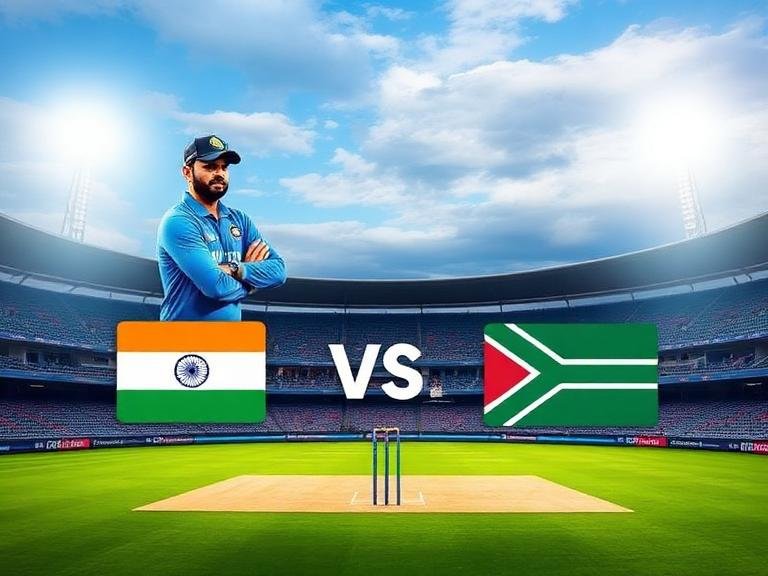
For eleven straight games, India had made winning T20 World Cup matches look almost routine. Then, on a February night at the Narendra Modi Stadium in Ahmedabad, South Africa reminded everyone why this fixture never comes with a guaranteed script.
The 43rd match of the ICC Men’s T20 World Cup 2026, a Super Eights, Group 1 clash, ended with South Africa beating India by 76 runs — comfortably their biggest margin of victory over India in a T20 World Cup and the result that snapped a run of 12 consecutive wins for the hosts in the tournament. If you’re searching for the full India national cricket team vs South Africa national cricket team match scorecard, here’s everything that happened, ball by ball in spirit if not quite literally, plus the context of what it meant for both sides afterward.
Match Snapshot
- Match: India vs South Africa, 43rd Match, Super Eights Group 1, ICC Men’s T20 World Cup 2026
- Date: February 22, 2026
- Venue: Narendra Modi Stadium, Ahmedabad
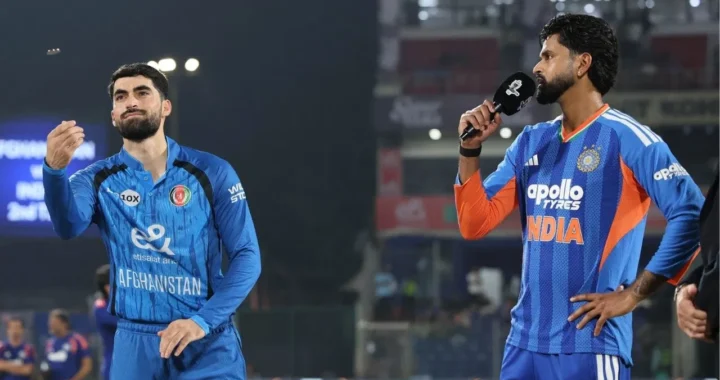
- Toss: South Africa won the toss and chose to bat
- Result: South Africa won by 76 runs
- Player of the Match: David Miller (South Africa)
South Africa’s captain Aiden Markram won an important toss on a pitch that offered a little bit for the bowlers early on, and he didn’t hesitate to bat first — a decision that would look shrewd by the end of the night.
South Africa Innings: 187/7 in 20 overs
South Africa didn’t exactly cruise to their total. India’s new-ball attack, led by Jasprit Bumrah, ripped through the top order and had the Proteas reeling at 20 for 3 inside the powerplay. It was the kind of start that, on paper, should have set India up for a routine chase. South Africa had other ideas.
David Miller and Dewald Brevis came together with the innings hanging by a thread and rebuilt it almost from scratch, adding 97 crucial runs for the fourth wicket. Miller, playing with the calm of a batter who has been in these exact pressure situations more times than he can count, counter-attacked his way to 63 off just 35 balls, studded with 7 fours and 3 sixes. Brevis was scarcely less impressive, striking 45 off 29 deliveries to keep the scoreboard ticking at nearly a run a ball throughout the rebuild.
Just when India looked to have found a way back into the game, Tristan Stubbs finished the innings the way modern T20 cricket demands, smashing an unbeaten 44 off only 24 balls, including a couple of back-to-back sixes in the closing overs that took the total from merely competitive to genuinely daunting.
South Africa batting
| Batter | Runs | Balls | 4s | 6s | Dismissal |
|---|---|---|---|---|---|
| David Miller | 63 | 35 | 7 | 3 | not out |
| Dewald Brevis | 45 | 29 | 3 | 3 | out |
| Tristan Stubbs | 44 | 24 | — | 2 | not out |
| Others | 35 | — | — | — | — |
| Total | 187/7 | (20 overs) |
India bowling
| Bowler | Overs | Runs | Wickets | Economy |
|---|---|---|---|---|
| Jasprit Bumrah | 4 | 15 | 3 | 3.75 |
| Arshdeep Singh | 4 | 28 | 2 | 7.00 |
Bumrah was, once again, India’s best bowler by a distance, finishing with figures of 3 for 15 from his four overs — the sort of spell that keeps a total below 200 rather than letting it balloon past it. Arshdeep chipped in with 2 wickets of his own, while the rest of the attack (Ravi Kumar Singh, Washington Sundar, Varun Chakravarthy and Hardik Pandya) shared the remaining 12 overs without the same cutting edge. It just wasn’t enough on a night when South Africa’s middle order refused to blink.
India’s Chase: 111 All Out in 18.5 Overs
Chasing 188 was always going to require India’s top order to fire, and instead the innings unraveled almost immediately. Marco Jansen struck with his very first ball of the match to remove Tilak Varma, and Ishan Kishan followed soon after, undone by Aiden Markram’s part-time off-spin — not the way any top-order batter wants to be dismissed in a World Cup knockout-stakes game.
By the time the scoreboard read 51 for 5, the chase had effectively slipped away. Marco Jansen was relentless with the new ball and Keshav Maharaj tightened the screws through the middle overs, at one stage taking three wickets in a single over that all but ended any faint hopes of a recovery.
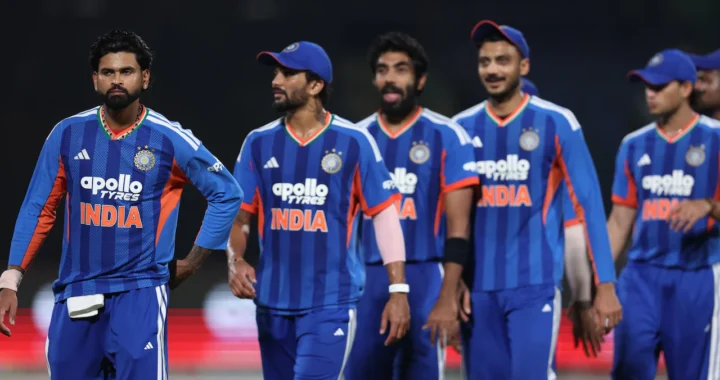
Shivam Dube played the only genuinely defiant innings of the chase, top-scoring for India with 42 off 37 balls including a four and three sixes, but it was a rearguard action rather than a real chase — runs scored with the game already gone, against bowlers who by then were simply mopping up. Suryakumar Yadav (18), Hardik Pandya (18) and Washington Sundar (11) all got starts without ever threatening to build the kind of partnership India desperately needed. India were bowled out for 111 with 7 balls to spare.
India batting
| Batter | Runs | Balls | 4s | 6s | Dismissal |
|---|---|---|---|---|---|
| Ishan Kishan | 0 | 4 | — | — | c & b Markram |
| Abhishek Sharma | 15 | 12 | — | — | caught |
| Tilak Varma | 1 | 2 | — | — | caught behind, b Jansen |
| Suryakumar Yadav | 18 | 22 | — | — | caught |
| Washington Sundar | 11 | 11 | — | — | caught, b Maharaj |
| Shivam Dube | 42 | 37 | 1 | 3 | caught |
| Hardik Pandya | 18 | 17 | — | — | caught |
| Rinku Singh | 0 | 2 | — | — | caught |
| Arshdeep Singh | 1 | 2 | — | — | caught |
| Varun Chakravarthy | 0 | 3 | — | — | not out |
| Jasprit Bumrah | 0 | 1 | — | — | caught |
| Total | 111 | (18.5 overs) | all out |
South Africa bowling
| Bowler | Overs | Runs | Wickets | Economy |
|---|---|---|---|---|
| Marco Jansen | 3.5 | 22 | 4 | 5.73 |
| Keshav Maharaj | 3 | 24 | 3 | 8.00 |
| Corbin Bosch | 3 | 12 | 2 | 4.00 |
| Aiden Markram | 1 | 5 | 1 | 5.00 |
| Kagiso Rabada | 4 | 32 | 0 | 8.00 |
| Lungi Ngidi | 4 | 15 | 0 | 3.75 |
Marco Jansen was the standout with the ball, finishing with 4 for 22, but it was David Miller’s counter-attacking 63 that swung the momentum South Africa’s way in the first innings and earned him the Player of the Match award.
What This Loss Actually Meant
Losing by 76 runs and dropping to the bottom of the Super Eights Group 1 table on net run rate looked, in the moment, like a genuine crisis for India. It was their first defeat of the tournament, and it came at the worst possible time — right in the middle of the knockout-stage jostling, with a negative net run rate of around -3.80 leaving no margin for another slip-up.
As it turned out, this was the low point of India’s tournament rather than the story of it. India regrouped, won their remaining group games, beat England in a high-scoring semi-final thriller, and went on to defeat New Zealand by 96 runs in the final to lift their third T20 World Cup title — becoming the first team to win the trophy three times and the first host nation ever to win it. South Africa’s own campaign, built on that Ahmedabad performance and Miller’s form throughout the tournament, ultimately ended in the semi-finals, where New Zealand got the better of them at Eden Gardens.
Looked at with hindsight, the Ahmedabad result reads less like a collapse and more like the jolt India needed. Sport has a habit of doing that — the worst night of a tournament sometimes ends up being the one that sharpens a team for everything that follows.
Head-to-Head Context
This wasn’t an isolated blip either — India and South Africa had also faced off in Test cricket earlier in the same season, in the Freedom Trophy series, where South Africa won the series opener at Eden Gardens, Kolkata, by 30 runs behind gritty contributions from Aiden Markram and a five-wicket haul from Jasprit Bumrah with the ball. Between the red-ball and white-ball formats, South Africa had clearly arrived in this cycle as a side unwilling to play second fiddle to India, and Ahmedabad was the clearest statement of that intent.
For fans revisiting this scorecard, the numbers tell a simple story: South Africa’s middle order — Miller, Brevis and Stubbs — outbatted India’s, and their bowling attack, led by Jansen and backed by Maharaj’s spin, never let India’s chase breathe. It’s a result worth remembering not because of where it left the table on the night, but because of how differently the story ended for both teams a few weeks later.
[…] Also Read: IND vs SA Scorecard: How South Africa Stunned India by 76 Runs to End a 12-Match World Cup Streak […]
[…] Also Read: IND vs SA Scorecard: How South Africa Stunned India by 76 Runs to End a 12-Match World Cup Streak […]